

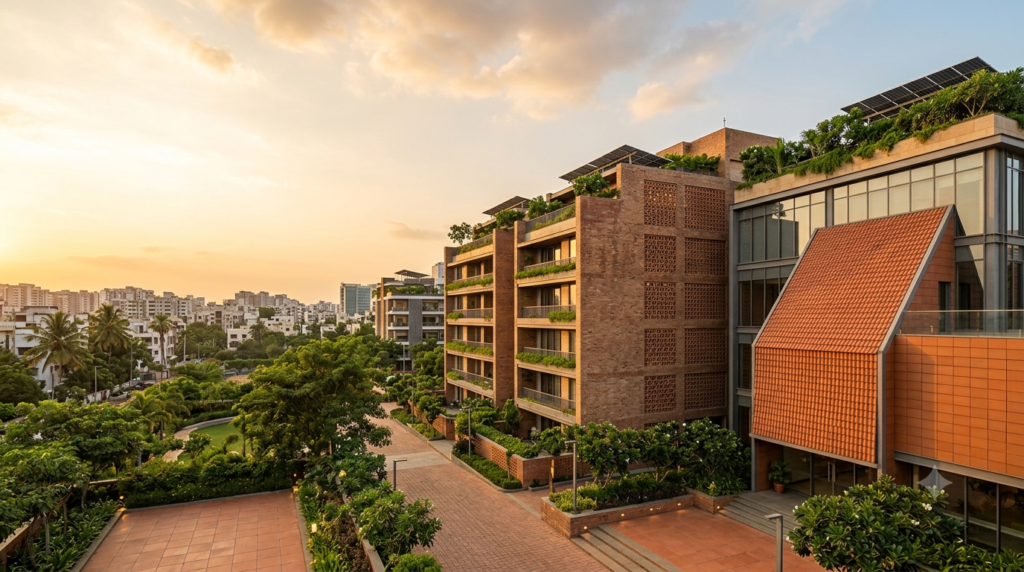
India’s construction industry is undergoing a remarkable transformation driven by rapid urbanization, infrastructure development, sustainability goals, and technological advancements. As the demand for smarter, greener, and more durable buildings continues to rise, the choice of building materials has become more important than ever.
Today, architects, builders, developers, and homeowners are moving beyond conventional construction materials in favor of innovative solutions that improve energy efficiency, reduce environmental impact, and enhance long-term performance. Among these emergining trends, clay building materials have gained significant attention for their sustainability, durability, and timeless architectural appeal.
In this article, we’ll explore the top building material trends shaping India’s construction industry and how these innovations are influencing the future of modern construction.
1. Sustainable Building Materials Are Becoming the New Standard
Environmental concerns and green building initiatives have encouraged the construction industry to adopt sustainable building materials.
Builders are increasingly choosing products that:
- Reduce carbon footprints
- Improve energy efficiency
- Minimize construction waste
- Require less maintenance
- Offer long service life
Natural clay products, including bricks, blocks, tiles, and pavers, have become a preferred option due to their eco-friendly properties and long-term durability.
2. Growing Demand for Clay Building Materials
One of the biggest trends in India’s construction sector is the growing use of clay building materials.
Architects and developers appreciate clay products because they provide:
- Superior thermal insulation
- Natural aesthetics
- Fire resistance
- Weather durability
- Low maintenance
- Sustainable performance
Products such as Clay Face Bricks, ThermoBricks (Clay Hollow Blocks), Wall Cladding Tiles, Clay Roof Tiles, and Brick Pavers are becoming increasingly common in residential and commercial developments.
3. Energy-Efficient Construction
As electricity costs continue to rise, energy-efficient buildings have become a priority.
Modern construction now focuses on materials that improve indoor comfort while reducing dependence on air conditioning and heating systems.
Materials with excellent thermal insulation help:
- Reduce heat transfer
- Lower cooling costs
- Improve indoor comfort
- Enhance energy performance
ThermoBricks (Clay Hollow Blocks) are an excellent example of building materials that contribute to energy-efficient construction.
4. Modern Architectural Facades
Today’s buildings are designed to stand out while maintaining functionality.
Modern facades increasingly incorporate:
- Clay Face Bricks
- Perforated Face Bricks
- Wall Cladding Tiles
- Handmade Cladding
- Extruded Cladding Tiles
These materials create visually appealing elevations while providing long-term durability and minimal maintenance.
5. Smart Material Selection for Long-Term Value
Developers are no longer selecting materials based solely on initial costs.
Modern purchasing decisions now prioritize:
- Product lifespan
- Durability
- Maintenance requirements
- Thermal performance
- Sustainability
- Return on investment
High-quality building materials often deliver significant long-term savings through reduced repairs and energy consumption.
6. Rise of Natural Finishes
Minimalist architecture has increased the popularity of natural finishes.
Instead of relying heavily on paint or artificial cladding, architects are embracing:
- Exposed clay bricks
- Terracotta finishes
- Natural stone textures
- Clay floor tiles
- Decorative breeze blocks
These materials create timeless architectural designs while reducing maintenance requirements.
7. Green Building Certification
Projects pursuing green building certifications increasingly use environmentally responsible materials.
Clay building products support sustainable construction by offering:
- Natural raw materials
- Long service life
- Improved energy efficiency
- Low maintenance
- Recyclable properties
These characteristics contribute to environmentally responsible building practices.
8. Prefabrication and Precision Manufacturing
Advanced manufacturing technology is improving the quality and consistency of building materials.
Modern production facilities now use:
- Automated extrusion systems
- Robotic handling
- Precision quality control
- High-temperature tunnel kilns
These technologies ensure superior dimensional accuracy, durability, and product consistency.
9. Outdoor Living Spaces
Outdoor areas have become an essential part of residential design.
Builders increasingly use clay products for:
- Walkways
- Driveways
- Courtyards
- Patios
- Garden pathways
- Outdoor entertainment spaces
Clay brick pavers provide durability, safety, and natural beauty for these applications.
10. Fire-Resistant Building Materials
Safety has become a major consideration in modern construction.
Materials that offer excellent fire resistance are increasingly preferred in residential, commercial, and industrial projects.
Clay products naturally resist fire, making them suitable for buildings where occupant safety is a priority.
11. Climate-Responsive Construction
India’s diverse climate requires building materials that perform well under varying weather conditions.
Clay building materials help:
- Maintain indoor comfort
- Resist extreme weather
- Reduce thermal gain
- Improve building efficiency
Their natural insulating properties make them ideal for both hot and moderate climates.
12. Low-Maintenance Building Solutions
Modern homeowners and developers prefer materials that require minimal maintenance over their lifespan.
Clay products resist:
- Moisture
- Fading
- Weathering
- Corrosion
- Pest damage
This reduces maintenance costs while preserving the building’s appearance.
Why Clay Building Materials Are Leading These Trends
Clay products continue to gain popularity because they combine multiple advantages in a single material.
Some of the key benefits include:
- Sustainable construction
- Superior thermal insulation
- Exceptional durability
- Fire resistance
- Low maintenance
- Timeless aesthetics
- Energy efficiency
- Long service life
- Architectural versatility
These qualities make clay one of the most future-ready building materials available today.
Why Choose Jindal Ceramica?
Jindal Ceramica is a trusted manufacturer of clay building materials, offering innovative solutions for residential, commercial, and architectural projects across India.
Its comprehensive product portfolio includes:
- ThermoBricks (Clay Hollow Blocks)
- Clay Face Bricks
- Perforated Face Bricks
- Wall Cladding Tiles
- Handmade Cladding Tiles
- Extruded Cladding Tiles
- Clay Floor Tiles
- Clay Roof Tiles
- Breeze Blocks
- Brick Pavers
- Terracotta Tiles
- Clay Brick Tiles
Manufactured using advanced extrusion technology, robotic automation, and high-temperature tunnel kilns, Jindal Ceramica products deliver outstanding quality, durability, and sustainable performance.
Conclusion
India’s construction industry is embracing a new generation of building materials that prioritize sustainability, energy efficiency, durability, and architectural excellence. From smart manufacturing and climate-responsive design to natural finishes and eco-friendly construction, these trends are shaping the future of residential and commercial projects across the country.
Among these innovations, clay building materials continue to stand out as a reliable and sustainable choice. Their timeless aesthetics, thermal insulation, fire resistance, and long-lasting performance make them an ideal investment for modern construction. By choosing premium products from Jindal Ceramica, builders, architects, and homeowners can create structures that are built to perform today and for generations to come.